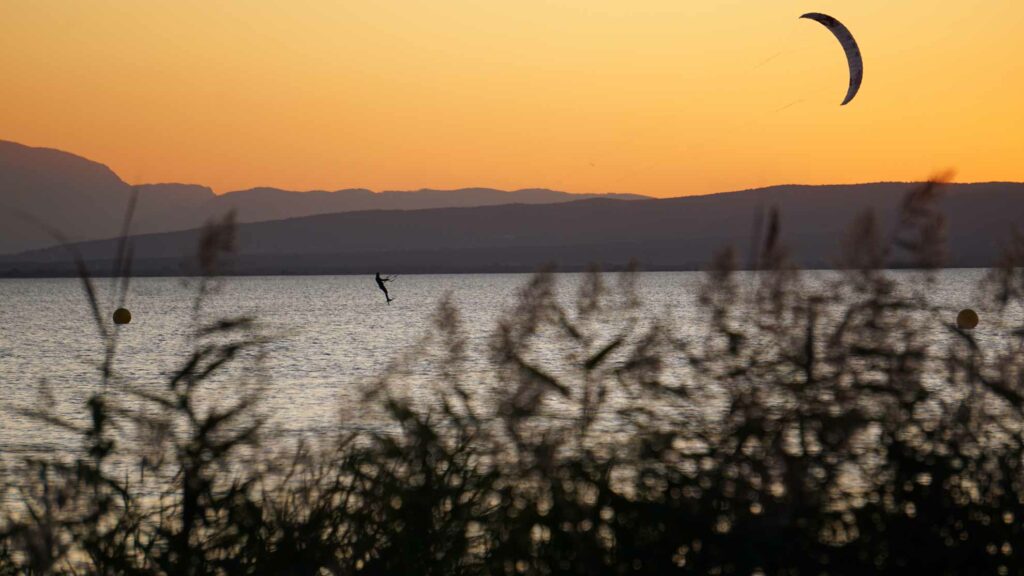
Duotone Capa vs. Flysurfer Soul
This autumn we had the opportunity to try out the new Duotone "Capa". Before that, we didn't even know that a foil kite from Duotone will be launched (again). The surprise was quite big and we briefly tested the Capa .
In the meantime, every new foil kite is compared to the Flysurfer Soul, as the kite from Flysurfer has made the foil kites more or less ready for the masses. But in our opinion, one should not do this too quickly - there are some potential pitfalls.
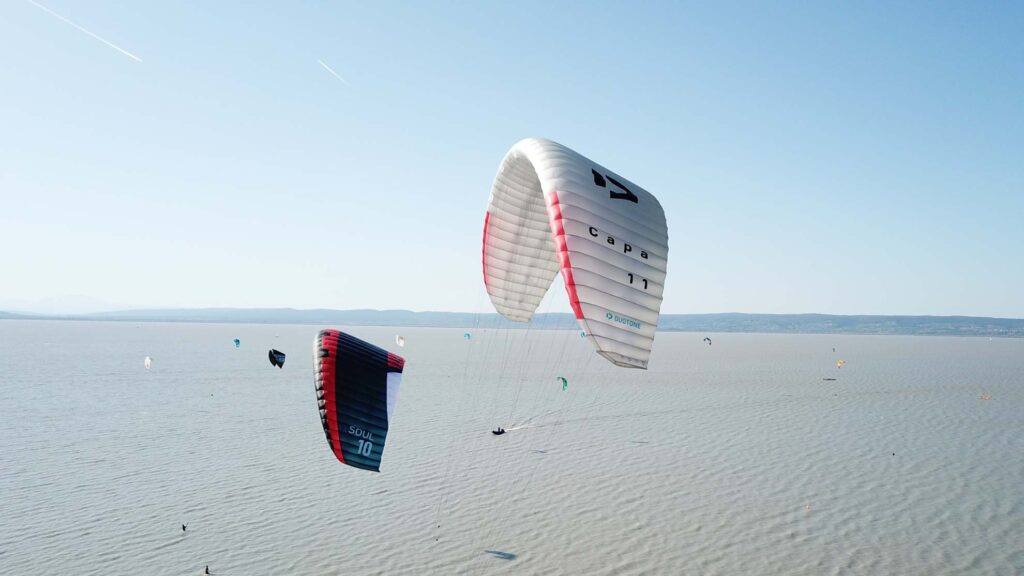
We have summarized the differences and what which kite can do now (after a rather short test). On this day we compared the Duotone Capa in 11 sqm and the Flysurfer Soul in 10 sqm.
Material & construction
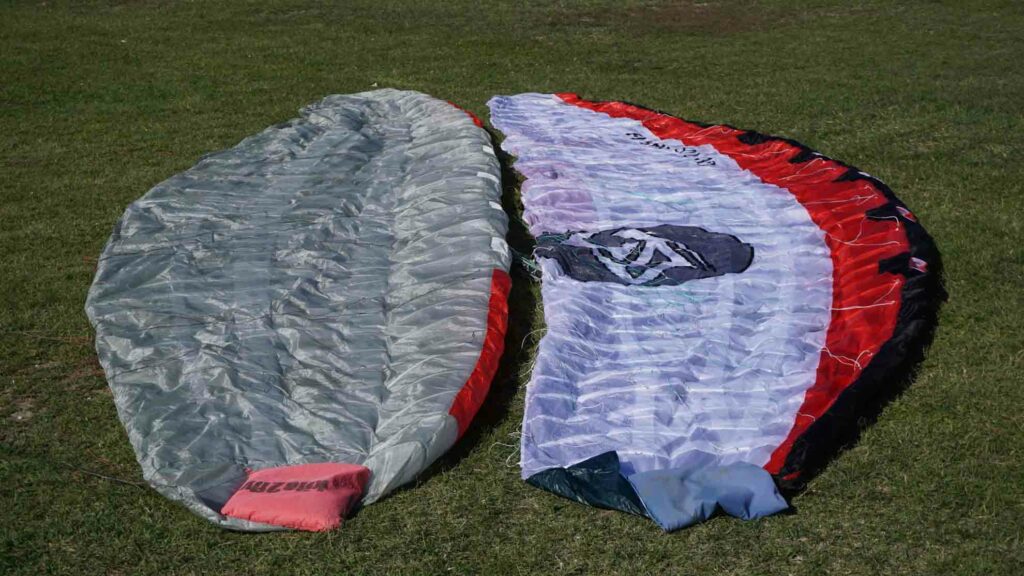
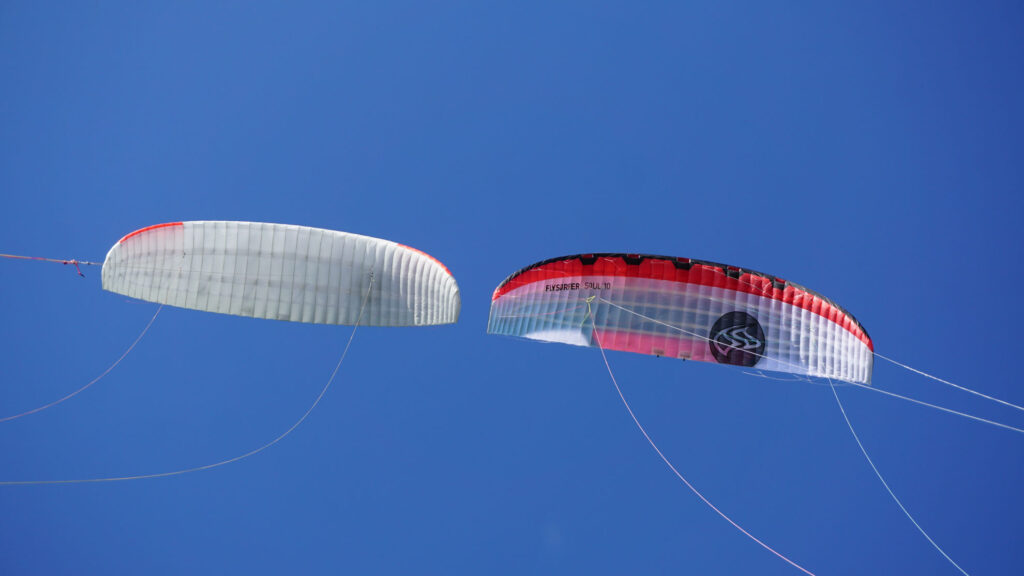
When laid on the ground, the two kites look about the same size. You can immediately see a difference in the shape. The CAPA is wider in the middle than the SOUL and the trailing edge is elliptical.
The CAPA's canvas is thicker and more robust than the Soul's and therefore also heavier. The CAPA is built entirely from the same material. The Soul on the other hand, has a slightly thicker canvas on the stressed leading edge, a lighter canvas is used for the other parts.
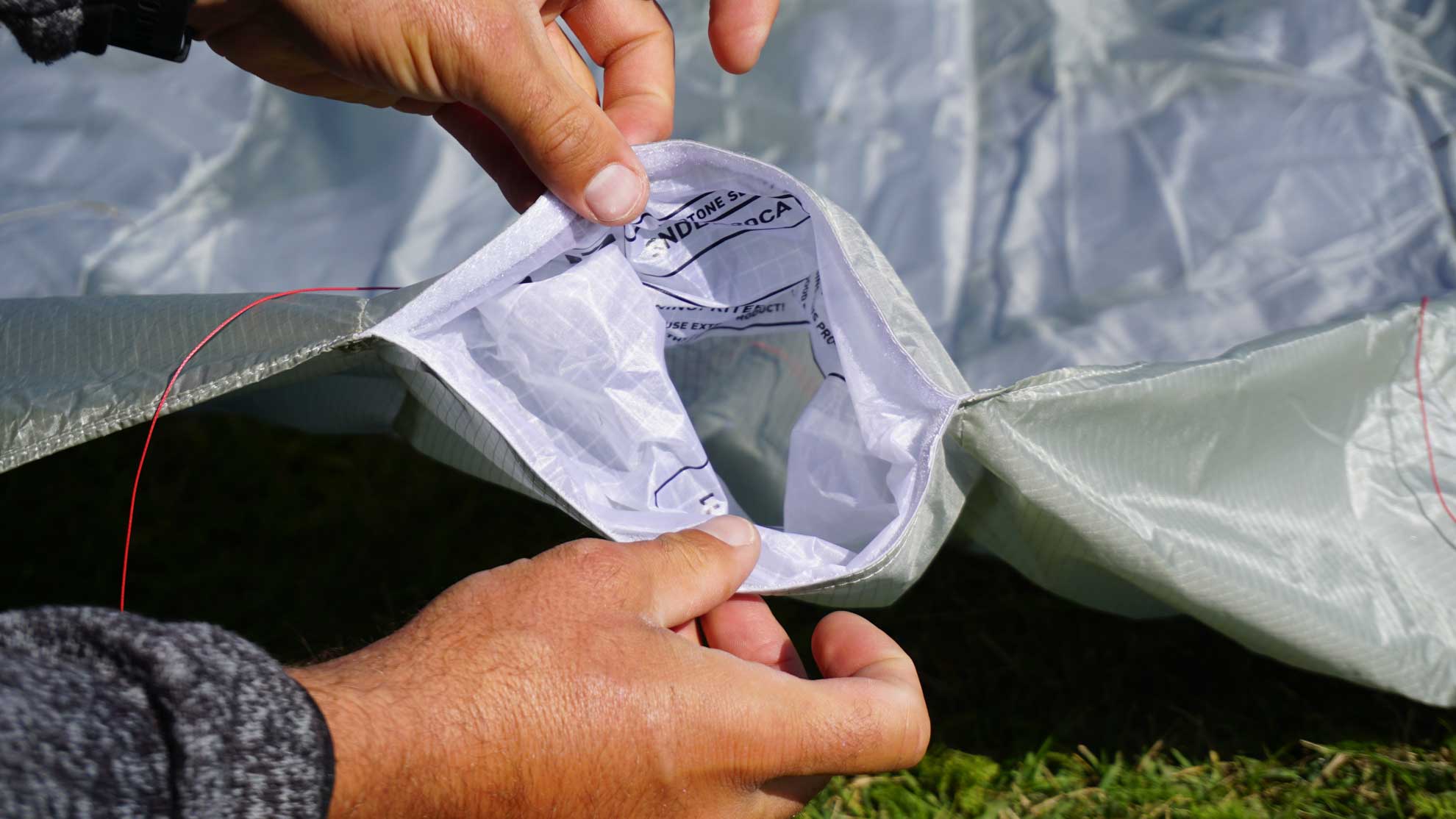
Both kites have 5 air inlets . On the Capa, they are somewhat smaller and have a mesh grille. Both kites fill up about the same speed.
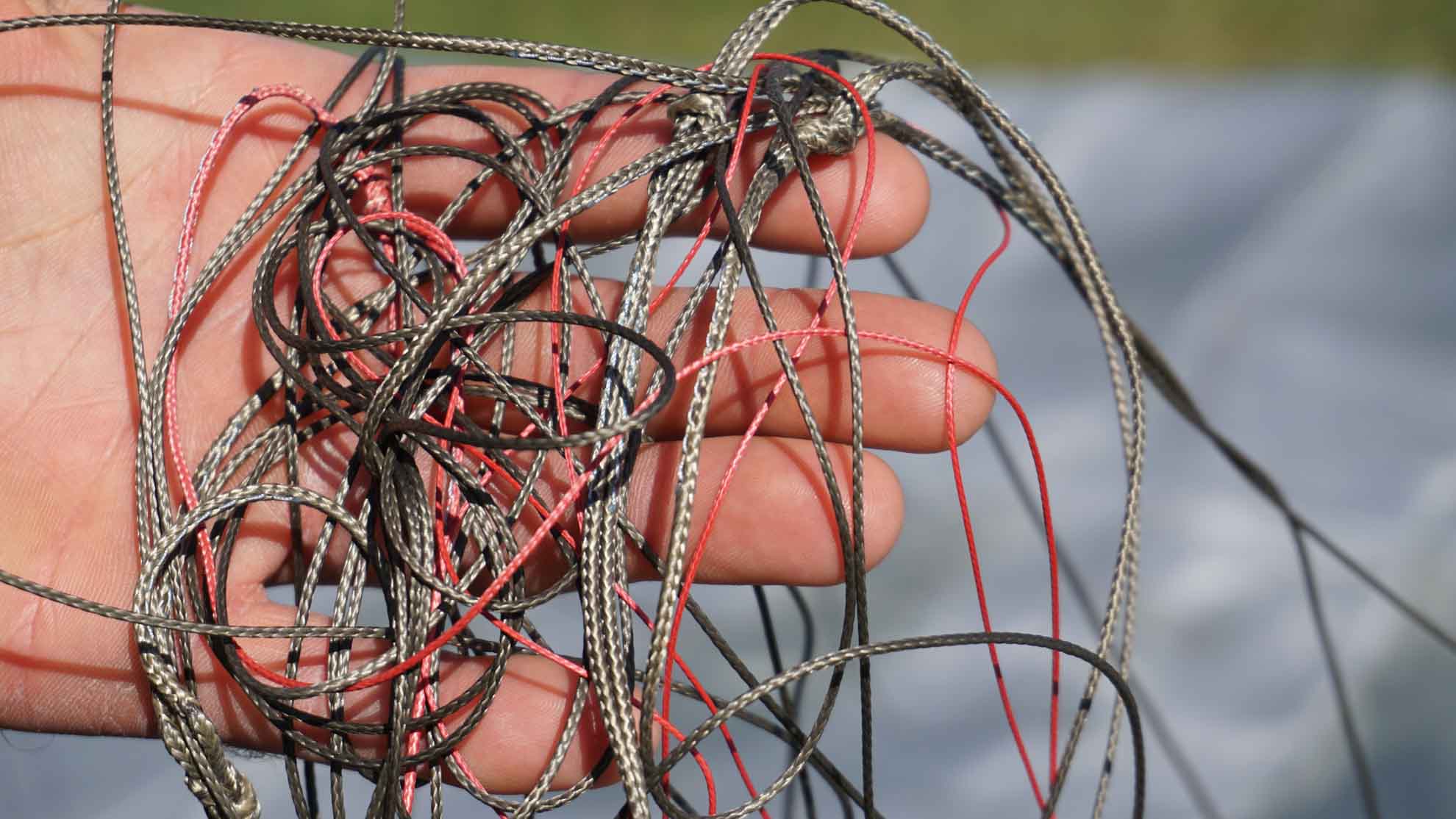
The bridle has thicker lines than the Soul. It is a little heavier but also less stretchy and therefore more direct.
The pulleys are a bit big on the CAPA, with other manufacturers we have had problems with these large rollers because they sometimes get tangled. In our short test, we had no problems.
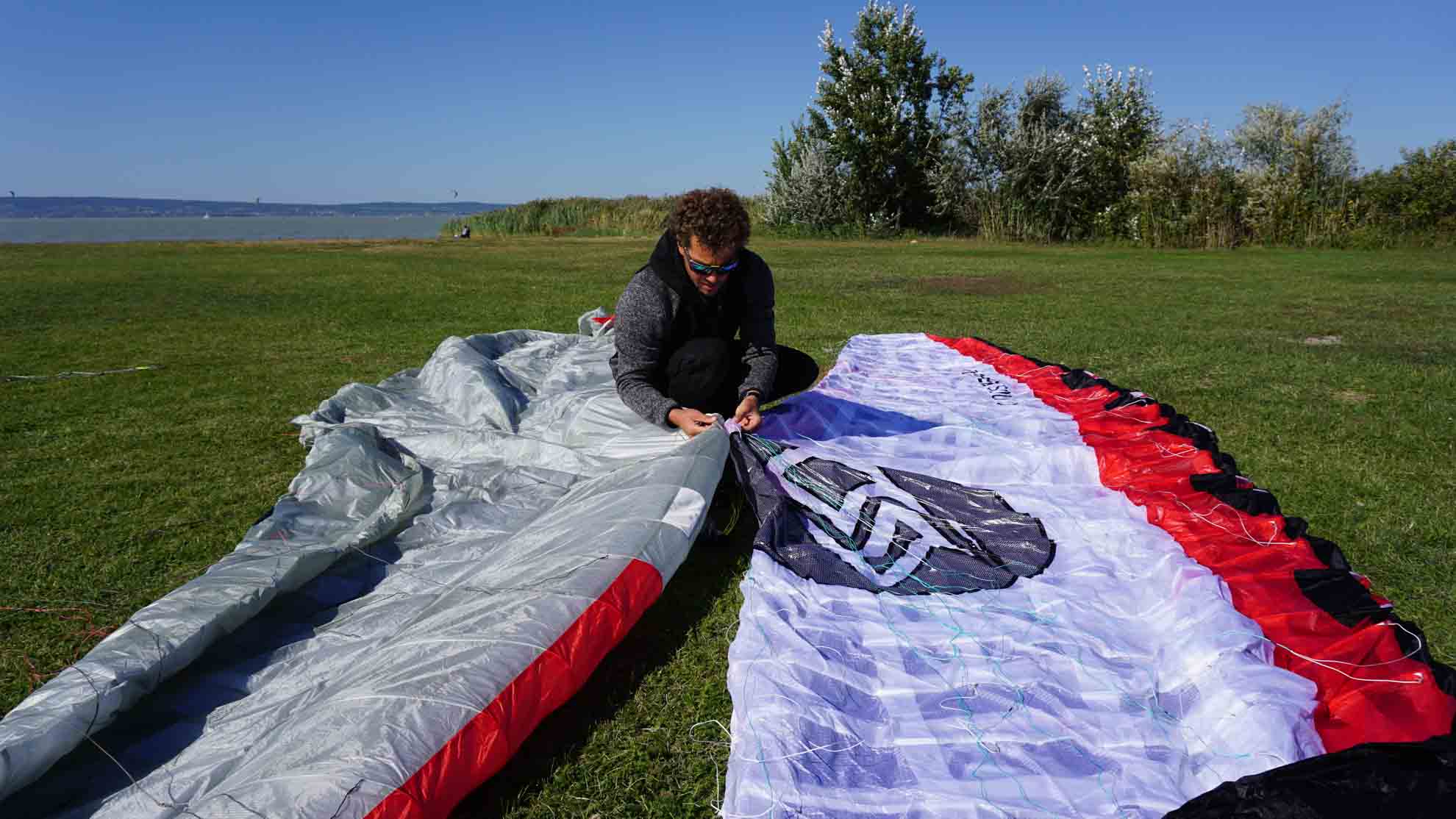
Briefly about launching and landing: What is immediately noticeable is that the capa fills up extremely quickly and is not capricious at all. The SOUL has two air outlets , the CAPA only one. When dismantling, the air goes out equally quickly with both kites.
Our first quick thoughts or impressions after the first 5 minutes:
- Extremely hard, stable cap (like a board)
- High performance feeling
- very high steering and bar pressure
- kite rotates in the turn
- reminds us of the "Diabolo" by FOne
- goes very far to the edge of the wind window and overshoots well beyond 12 o'clock, but never folds and stalls
The relaunch
'Really, you can relaunch such a kite on the water? I always thought ...' are the first thoughts of kitesurfers without foil kite experience. Eligible anyway. And yes, you can start soft kites from the water again, but you have to know how. I can also remember when people kept saying: 'Have you already tried the FOne Bandit, it has an auto relaunch function.' Yeah, right? I can also launch any other kite. The important thing is how at many knots I can still get the kite out of the water, how is actually pretty 'blunzn' (no matter).
We start a soul via a steering line, as you are used to with tube kites. This does not work with the Duotone Capa. You have to pull both steering lines. So what? You learn this when landkiting, you learn this when you are at the water in all conditions and when teaching kitesurfing.
The relaunch using both steering lines works pretty good because the lines 'grip' very well on the entire rear edge. Here, the 'intended stalling' (see section 'Handling') is again beneficial. You are very well connected to the kite. If you pull both steering lines, it pulls the whole kite together at the back and the kite starts backwards in the lightest breeze.
Handling
The handling of the Duotone CAPA takes some time getting used to. It reminds us of high-performance mats. The steering and bar pressure is very high compared to the SOUL. This has advantages and disadvantages in certain settings. More on that later.
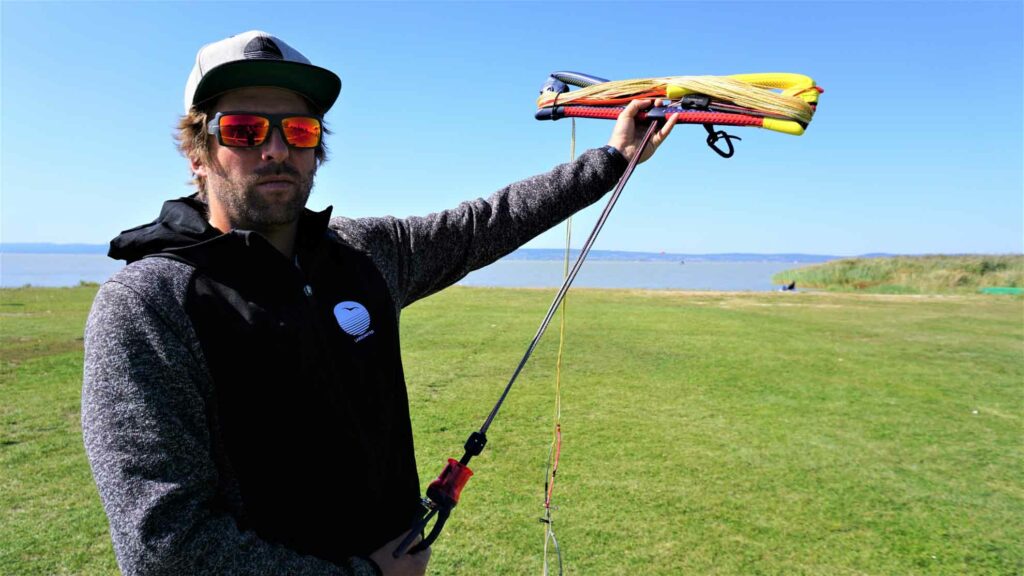
The depower line is very long, so you can power the CAPA very far. The increase in strength is enormous.
When you pull on the bar, you visibly change the shape and the curvature of the cap of the kite. You have the feeling that the whole kite is pulled together at the back and at the same time the angle of attack of the kite is increased massively.
A feeling of direct control. Here, however, you can quickly pull the kite into a 'complete stall' when producing a back stall. For an experienced kiter and in certain settings, this is even desirable.
If, for example, you have to or want to go a direct downwind course on the Hydrofoil or if you want the kite to rotate on the spot.
When responding to steering impulses, you can see in a direct comparison that the CAPA is a bit heavier than the Soul and therefore also a little slower to respond. You can feel that more weight has to be moved. The soul is a little more light-footed there. Due to the thicker lines and the thicker canvas, we assume that has less stretch, the power development of the CAPA feels more direct than the SOUL's. Consequently, a little more sporty.
Power and depower
The 11 CAPA has significantly more power compared to the 10 SOUL. Even more than a 12 Soul.
The comparison to the 10 was a quick shot, you would need to compare it with a 12 or 13 (does not exist) SOUL.
Jumping
We only jumped with the foil. CAPA's lift is very high and explosive. In the air it needs a little sensitivity to get the most out of it while not forcing the kite into a stall.
You have to feel exactly how much the bar has to be pulled to get full performance. The 10 SOUL is less demanding here. The 10 SOUL lacks the horsepower in a direct comparison. But you would have to compare it with a 12 SOUL to be fair.

On the foil
That's the CAPA's discipline and it is really fun. It can fully exploit its race genes on the foil and you can feel that immediately. Riding upwind both kites are doing very well.
The CAPA may already have a nose ahead, but downwind there is the big difference.
By pulling the bar, the capa literally explodes and can be slowed down almost to the other side of the wind window. This makes extreme downwind courses possible.
Upwind tacks and downwind jibes are much easier with the CAPA. Due to the massive power, you can make yourself completely weightless and you can switch easily. Steer the kite up and pull the bar somewhere between 11 and 1. Timing is not that important with the CAPA. The SOUL can generate less lift by pulling the bar, so that the kite must be steered very precisely to a certain position in order to generate the necessary lift.
Don't miss anything!
Interesting facts for kitesurfers and those who want to become one, tips, tricks and how-tos, honest reviews and special offers – we only send our newsletter when we actually have something to offer you. Try our newsletter!
Overview Duotone Capa vs. Flysurfer Soul
Duotone Capa
- a lot of power and massive increase in strength when pulling the bar
- Maneuvers on the foil are much easier because you can make yourself literally weightless
- extremely stable
- overshoots a little (without folding away)
- High-performance handling (takes getting used to)
Conclusion Capa: the Duotone Capa is a very convincing kite. Very stable, excellent performance and a dream for foiling. For twin tip riders or tube kiters who would like to change, it takes getting used to. If you are looking for a mat with performance on the foil, you are exactly right with the Capa.
Flysurfer Soul
- Handling suitable for twin tip riders, there is no need for "sensitivity"
- less steering and bar pressure
- a bit lighter, therefore probably advantages in ultra light wind
- when foiling, maneuvers have to be carried out more precisely
- not such a big increase in strength through pulling the bar
Compared: the Flysurfer Soul is certainly the simpler soft kite, which makes the switch for twin tip kiters very easy. Less performance and "friendlier" handling (less steering forces and bar pressure, as well as a simpler relaunch) make the Soul suitable for the masses.